When the seven of us climbed out of our SUVs into the cool, dusty morning, we were barely a quarter-mile from the end of the road. The night before, from the windows of a de Havilland Otter, Southeast Alaska had looked like a vast quilt of spruce, meadows, and glacially shaped mountains. Now we stood in it—face-to-face with dense green growth, wet earth, and the uneasy knowledge that a brown bear could be just beyond the first wall of alder.

I paused long enough to scan the brush and decide which of my six companions I might be able to outrun.
We had driven north from Auke Bay, outside Juneau, along a narrow coastal road guarded by spruce, boulders, and ferns. Through gaps in the trees, saltwater flashed beneath sharp-shouldered islands. Small boats dotted the distance, seining for silver and king salmon. The farther we drove, the tighter the road became.
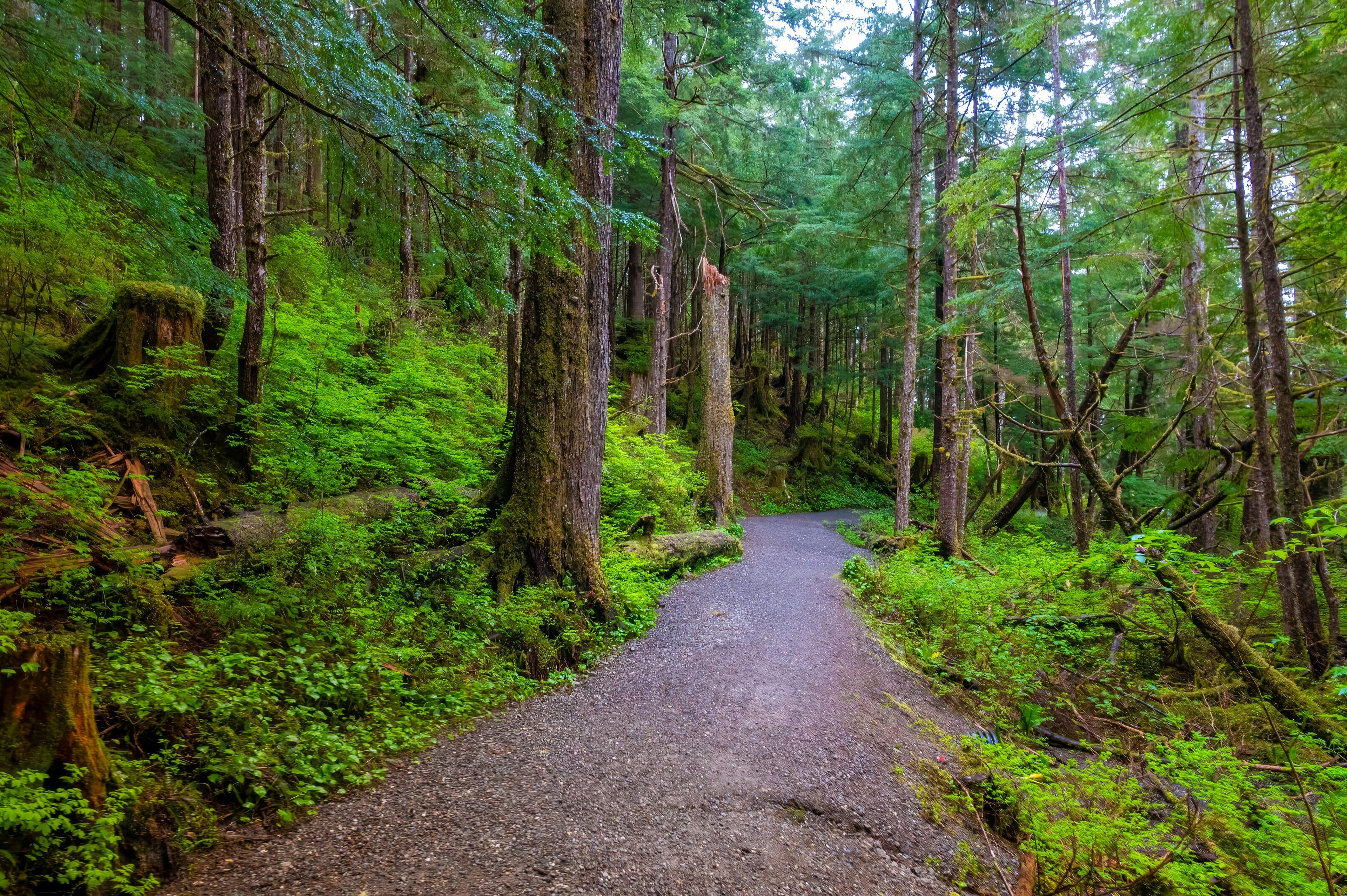
At one point, a flagger stopped us so an escort truck could guide us through construction. I rested an elbow on the window frame and watched excavators and workers in hard hats break apart massive knots of bedrock. They were widening the route, improving access, making passage easier. Yet a few miles later, as we pulled into the trailhead lot, the pavement curved left and vanished into an immense wall of green.

The road narrowed. Then our world did, too.
We pulled on waders, passed around bug spray, filled packs with water and bear spray, assembled rods, and tied flies with the hopeful focus of people placing bets before seeing the cards. We talked about pink salmon, Dolly Varden, chum salmon, brown bears, and the scale of the country we were about to enter.
But beneath the chatter, I felt unprepared.
Packing lists, advice, cross-country flights, and the long drive “out the road” with bluegrass playing through the speakers could bring me to this place. They could not take the steps for me. From that point forward, each footfall on the peat-and-spruce trail, each move into the milky glacial river flowing toward the sea, would be my own. My judgment, attention, instincts, and mistakes would matter.
The road had narrowed into a trail, and the trail had narrowed into a question: How would I meet a place that did not need me?
I came from upstate New York, where I had long felt protective of the remaining wild places around me. Development presses outward. Property lines, posted signs, and commercial sprawl make undeveloped ground seem increasingly scarce. Growing up, I escaped to the still-undeveloped shorelines near my favorite fishing spots, places where I could feel small in a reassuring way.
Southeast Alaska made that feeling larger and more complicated.
The Tongass National Forest, with its immense stands of spruce and rivers crowded with salmon, did not necessarily make me feel insignificant because it was giant. It made me feel small because it was so fully alive without my help. Bald eagles watched from above. Snow-covered mountains held their indifferent distance. The riverbed shifted beneath my boots, rearranged by water that had been moving long before I arrived and would keep moving long after I left.
At first, that realization unsettled me. Then it became a kind of relief.
With every whistle and shout of “Hey, bear!” sent into the vegetation, I grew more alert. With each step through the current, I became more present. I began to understand that being small in a wild place does not mean being meaningless. It means recognizing that our choices—where we walk, what we protect, how we pay attention—still matter.

Wilderness is not simply scenery or a destination to check off a list. It asks us to be humble, prepared, and fully awake. It reminds us that nature is not arranged around our comfort, schedules, or certainty.
The experience enriched and sharpened my sense of responsibility to the places I love, whether they are a vast Alaskan forest or a creek close to home in upstate New York. I returned with a deeper gratitude for wild land and a clearer understanding that feeling small can be a beginning rather than an ending.
At the end of that road, surrounded by salmon water, spruce, mountains, and the possibility of bears, I found that my horizons expanded as the path narrowed.