In the twilight of high school, a small group of friends would get together Friday nights after a week of classes to hang out. After some cheap Mexican food or a backyard beer can chicken barbecue, we would hit the links. Our regular tee time was at dusk, as the Denver night crept behind the sunset and down the long skirts of the Rocky Mountains.
The sacred rule of this adolescent ritual was to use only the clubs available at the course, nothing from home. I was chiefly responsible for supplying the cigars because I was tall, charming, and the local tobacconist didn’t card me the first time. We developed amateur grace placing the cigars along the edges of the green so the smoke wouldn’t get in our eyes during crucial putts. We played adults, and it was fun.

The cigars were cheap, of course, and the courses were mini-golf. A narrow 4-inch bridge over stagnant water is as challenging as anything on the Back 9 at Augusta. Most of today’s top golfers would fall apart on the cracked cement and thin carpeting of my home turf.
Since those nights, I’d guess that I’ve had maybe half a dozen cigars. And I don’t think it was the smoke, or the expense, or the time commitment. As I got older, I found new rituals that were more new, more edgy.
Yet in the popular imagination, cigars still loom large, even as smoking takes a deserved cultural downturn. But whereas cigarettes represent a kind of workingman’s break, cigars remain their opposite, symbols of wealth, power, and ease.
Cigar Aficionado launched in 1992 and is still published 6 times a year in print. While I was researching this piece, I went on their website. There was no paywall, no pop-ups, no hand-wringing about the end of journalism. Cigar journalism is alive and well. (I googled Cigarette Enjoyer magazine next, but alas).
Winston Churchill said, “My rule of life prescribed as an absolute sacred rite smoking cigars and also the drinking of alcohol before, after and if need be during all meals and in the intervals between them.” His doctor may have disagreed, but his great-grandkids aren’t speaking German. Progress can be measured by how good jokes go bad over time.
Che Guevara had a box of cigars delivered to JFK with a handwritten note: “To write to the enemy is difficult. I limit myself to extending my hand.” The embargo on Cuban cigars still stands, but cigar diplomacy commands the powerful to sit. There is no Camp David story of Obama sliding a pack of Marlboro Reds across the table to Benjamin Netanyahu.
As powerful, political objects cigars occupy a complicated place in our national landscape. The smoke-filled rooms of Tammany Hall symbolize secrecy and corruption. But we can also imagine Ulysses S. Grant smoking on the front steps of Appomattox Court House, marking the end of Hell with a sigh and a smoke.
Unlike a Jade statue, gold artifact, or a baby elephant, cigars as a diplomatic tool offer shared time slowed down to a sacred rite. Indigenous Americans knew this power, and we non-Indigenous Americans sometimes remember to continue the tradition of sitting down and participating in a common experience.

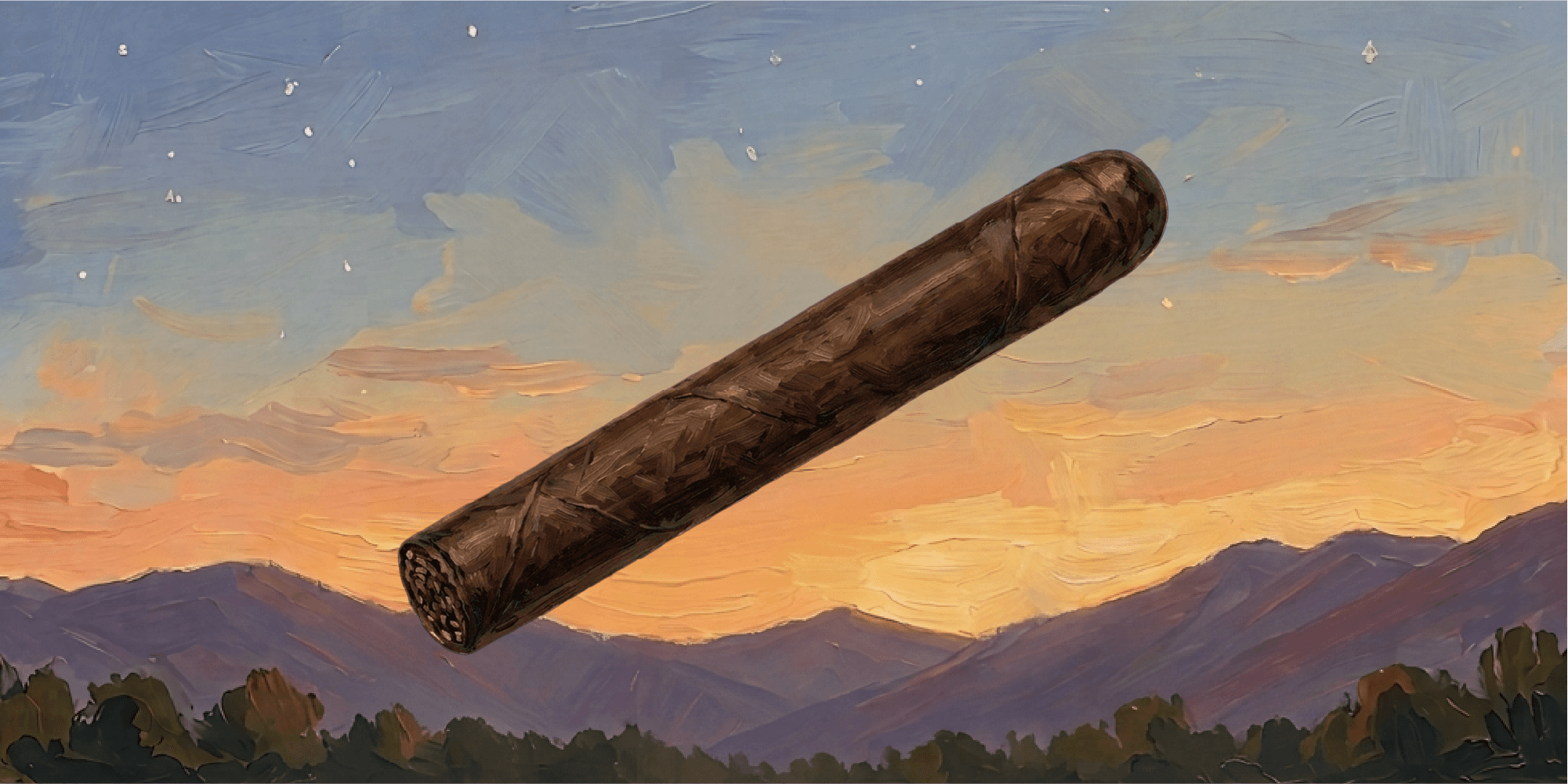
On a warm April night in 2003, an orange golf ball snuck between the blades of the windmill. It bounced along the ground and hit the back wall, rebounded, and landed clean in the cup. The other players groaned. I reached down to the edge of the rubber mat, lifted my $6 Arturo Fuente, and tapped the ash into the rocks.
This is not a pipe, this is not a cigar, this is not a handshake, this is not a war. “No matter what instruments he uses, at some point he reaches the edge of certainty beyond which conscious knowledge cannot pass.” Carl Jung knew that in our symbol making we reach through the curtain to grasp something unseen.
Come in here, dear boy, have a cigar.